

Dog Science Series Does My Dog Actually Dream?
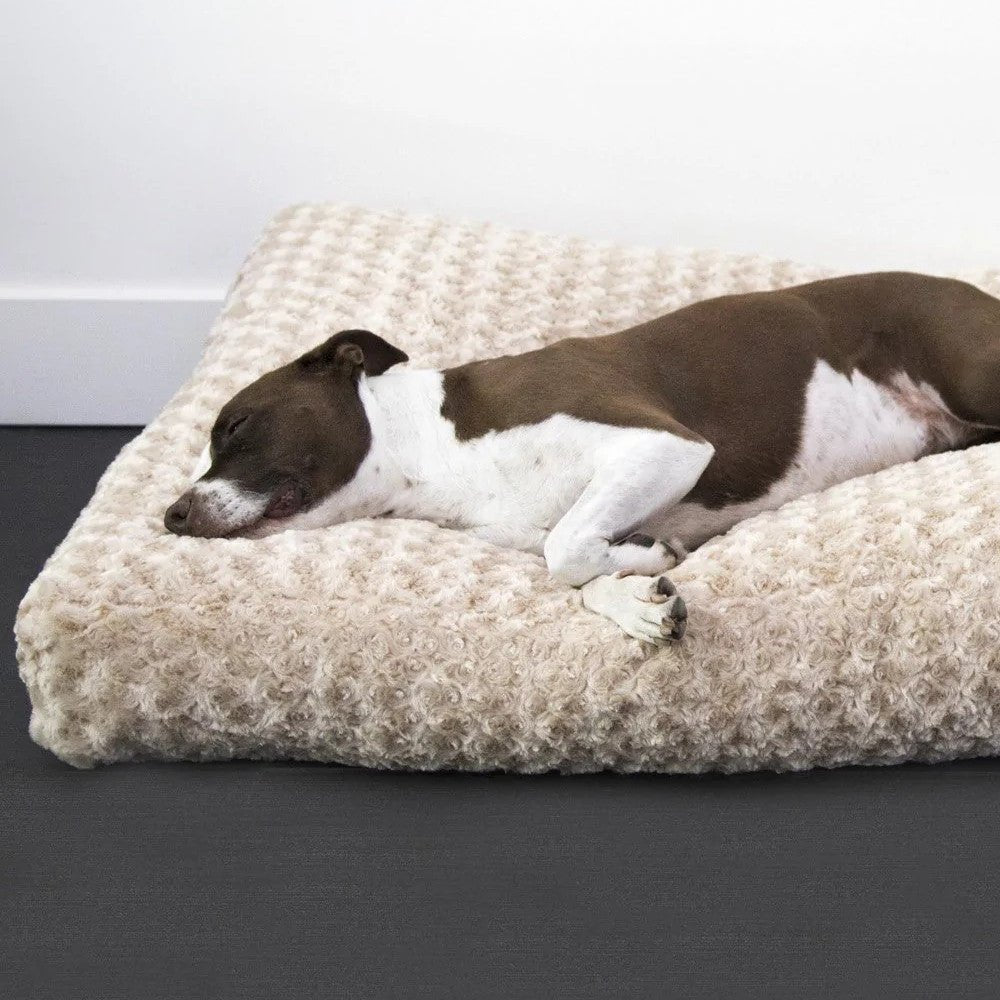
"To sleep, to sleep perchance to dream," wrote William Shakespeare in his famous play, Hamlet. While Shakespeare probably wasn't thinking about a doggy when he wrote that line, he nevertheless invoked a common trait that all mammals share: the ability to dream. Humans dream. Dogs dream. Even mice and rats dream.
Today we're going to pick apart the science of dog dreams, and dreaming in general, in an attempt to answer the question, "What do dogs dream about?" But first, a little bit of science.
The Science of Canine Dreams
What are dreams exactly? A window into another world? Wish fulfillment? Or simply the brainstem trying to organize and make sense of your experience during waking hours? Fortunately, some definitive answers can be found through biology.
As you (or your canine companion) fall asleep, key parts of your brain remain active. The pons, located at the base of the brainstem, employs neurotransmitters to help regulate electrical activity between the brain and the rest of the body. Even though you are unconscious, this information superhighway continues to do its job. Dog brains work in the same way.
According to Dr. Stanley Coren, famous for his research into the behavior and psychology of our canine companions, dogs and people share 95% of the same genetic makeup. Because dog brains are so similar to human brains, the biological processes that enable both sleep and dreams are virtually the same. But what exactly are those processes? In the next section, we'll take a look at your pooch's sleep cycle.
The Stages of Sleep
What happens when your dog shuts his eyes for the night and curls up in their doggy bed? When dogs lie down to sleep, there are specific stages that occur as their sleep begins. Just like their pet parents, pooches sleep in cycles. While humans typically experience four or five sleep cycles each night, dogs have far more.
The first phase of the cycle is non-REM sleep. REM stands for rapid eye movement, and it serves a critical function when it comes to dog dreams. In the initial stages, however, your dog will enter into a very light sleep from which they can easily be roused. During this phase, the dog's key bodily functions, such as their heart rate and breathing, will slow dramatically. This phase is also known as "slow wave sleep" or SWS. It is very similar in nature to the frequent catnaps that your companion probably takes throughout the day.
The next phase of the process is REM sleep. REM is short for rapid eye movement. During this period, you'll notice that your dog's eyes dart back and forth beneath their eyelids, and their muscles seem more active despite being asleep. During REM sleep, a dog's brain activity increases dramatically. We've all seen sleeping dogs that look like they are chasing the mailman. That's because the dog's most intense period of dreaming occurs during REM sleep. Although rapid eye movement lasts only a short time relative to the other phases, it is the most critical aspect of a dog's dream.
Depending on your dog's regular sleep patterns, they will then enter a period of alternating SWS and REM, heralding in long and complex dreams. During this final phase of the dog's sleep cycle, their body will relax and their breathing will become deep and regular, followed by quick bursts of muscle and brain activity. In turn, your canine companion may have periods containing extremely vivid dreams, as well as longer dreams that last up to a half an hour or more.
What Do Dogs Dream?
When dreaming, the human brain is capable of conjuring up fantastic scenarios that are almost indistinguishable from real life. These complex dreams are filled with familiar faces in unfamiliar settings, bizarre scenarios, and even deeply unsettling nightmares. People are easy to study though. All you have to do is ask them what they dreamed about. With dogs, it's not so simple.
What do dogs dream about when engaged in REM sleep? Do they live out their fantasies like we do? Do they experience the highs and lows, the terror and the joy like their human counterparts? While we don't know for certain, all signs point to yes! While engaged in deep sleep, dogs experience a robust array of dreams suited to their unique life experiences. They likely dream about situations like chasing the mailman, going on a walk, or playing with their favorite toy. Just like humans, brain waves do what they do, and we're all just along for the ride.
Do Different Dog Breeds Have Different Types of Dreams?
As an interesting side note, not all dog dreams are created equal. In fact, research points to a tangible difference in dream quality and duration depending on the dog's breed.
Many scientists believe that there is a direct correlation between the size of the dog and the length of its dreams. For example, small dogs like chihuahuas dream more often, but each of those dreams only lasts a minute of two. Conversely, large dogs such as retrievers dream less often, but those dreams last a while. Larger breeds also seem to experience less overall sleep cycles when they rest.
The Importance of a Healthy Sleep Cycle
Your companion's sleep patterns are just as critical as their waking hours. In order to have a healthy, happy pooch, they need adequate rest. Dogs follow a similar sleep cycle to their human counterparts. When dogs dream during REM sleep, however, they may twitch and whine. While it might be tempting to wake a dog engaged in REM sleep and shower them with cuddles, don't ! This is perfectly normal behavior for your canine companion to engage in. For more information on canine sleep cycles, or dogs in general, be sure to visit Animals Matter, Inc.
FAQS
Are dogs aware they are dreaming?
Just like humans, dogs dream about real life experiences. While it's impossible to gauge their recall, all scientific evidence points to the fact that they are aware of their dreams as they occur.
Should you wake a dreaming dog?
There's an old saying: let sleeping dogs lie. REM is part of a dog's regular sleep pattern. Let them rest while the dreams run their course!
What is your dog dreaming about?
Simply put, dogs dream about dog things. Whether it's going for a walk, chasing a ball, or scrounging for food, dogs dream about situations that occur in their day-to-day life.